
Expanding Creative Career Options Through Global Experiences
A message for creatives exploring their career path - from Julia Hill (ThinkSwiss & NCP Scholar)

Wake up. Practise. Eat. Lecture at uni. Practise. Chamber music rehearsal. Eat. Practise. Orchestra rehearsal. Go home. Eat. Practise. Sleep.
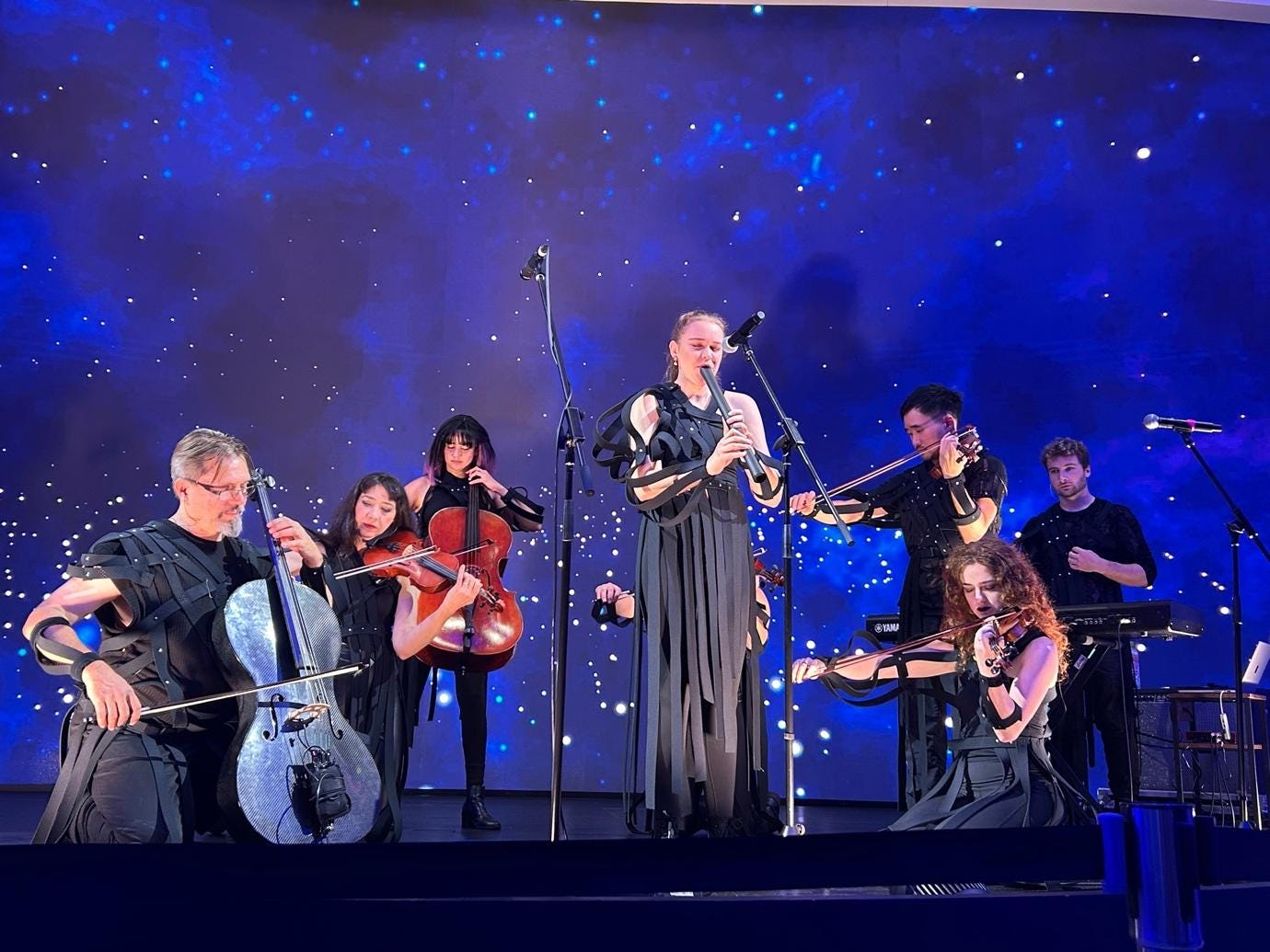
The above schedule describes my usual day when I was studying for my Bachelor of Music (Performance). It was intensive, challenging and invigorating. I loved going to university and I loved what I was learning. As I came closer to graduation, however, I began to wonder what I would do with all the hours I had spent in the practise room.
As classical musicians, we often are told that an orchestral career is the most viable path. No doubt, it would be an amazing career; but are only so many orchestral positions available which are being auditioned for by many, many highly qualified candidates.
Knowing that it would be difficult to secure an orchestral position after graduation, I successfully applied for two scholarships – the ThinkSwiss Scholarship and the New Colombo Plan Scholarship. It was through these global experiences that I realised there are infinite ways to craft a music career.
The ThinkSwiss Scholarship took me to Geneva, Switzerland where I worked alongside five composers from the Conservatoire de Musique de Genève. Together, we created a soundtrack for violin and electronics to accompany the film “HOME” by Yann Arthus-Bertrand. I was in full creative control of my music and my life; I was in a new place with new friends and new music.
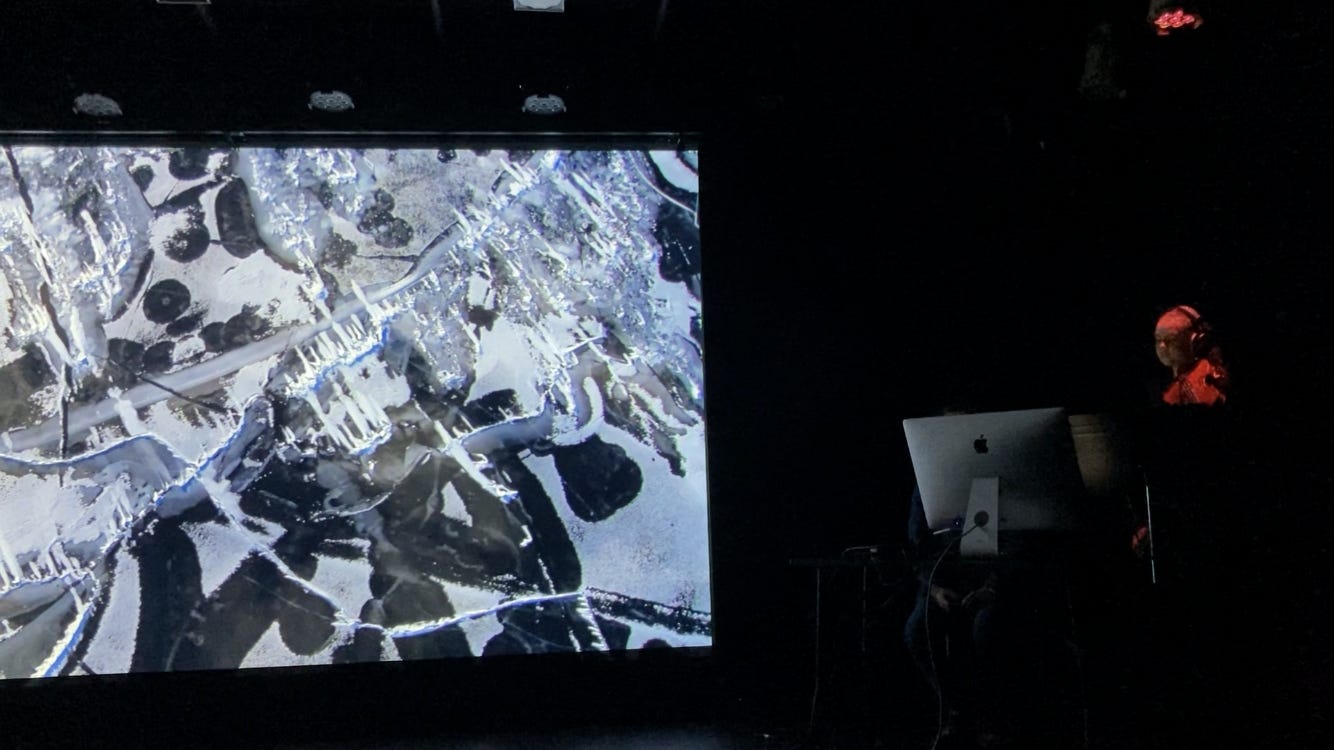
After this formative global experience, I no longer felt like my career options were limited; there are so many artists to collaborate with and learn from! I took this realisation into my New Colombo Plan Scholarship experience in Japan and dived into learning a new instrument – the shakuhachi, with master Akikazu Nakamura.
I remember my first lesson clearly. I had arrived in the area three hours early and had botched my way through ordering a bagel in Japanese at a nearby café before wandering to Nakamura-sensei’s studio. I was greeted warmly by Nakamura sensei’s staff and shortly after, I met the master himself, a kind smile radiating from his knowledgeable face.
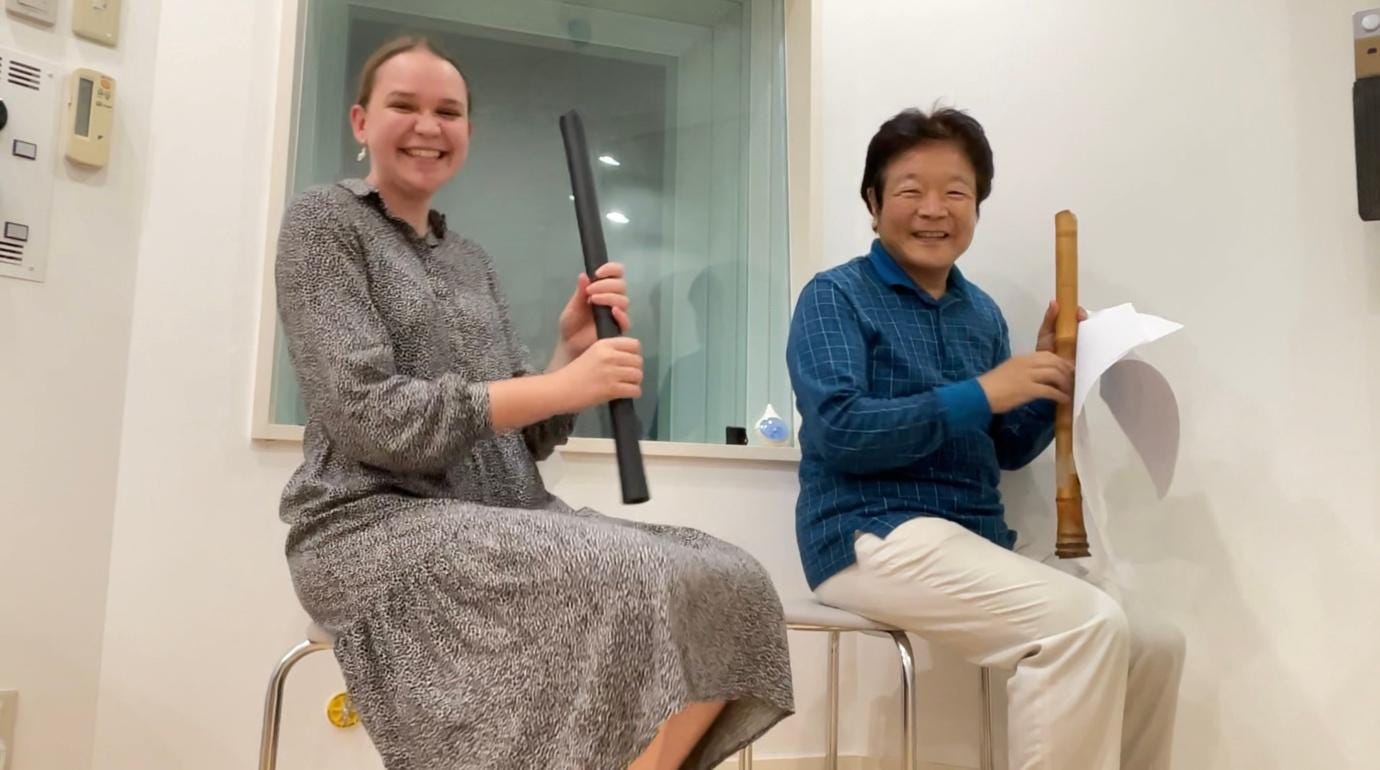
I often wonder what my life would have been like if I didn’t learn the shakuhachi. That first lesson led me to completing a 4-month long internship with Nakamura-sensei the following year, and I have just made my shakuhachi debut performing at the Osaka World Expo with the DeepBlue Orchestra.
These global experiences have expanded my career options exponentially. I could be an orchestral player, a shakuhachi player, a writer, a researcher, a director, a teacher, or all of the above.
So to all those artists out there, don’t feel overwhelmed by what is considered the ‘correct’ way to construct your career. Truthfully, your career is what YOU want to do, and if you’re still figuring that out, apply for a global scholarship. Meeting new people, experiencing an unfamiliar environment and being just a bit uncomfortable will fuel your creativity.
Are you ready to discover your creative power? I can’t wait to hear about where you go.
Thank you to Julia Hill for this incredible contribution. Julia’s reflection on global opportunities as a way to discover what’s possible, and unpack what you truly want to do, will no doubt inspire many young people exploring their next steps.